SUN, SEA & STUNNING SCENERY — IS THE GOOD OLD BRITISH HOLIDAY HERE TO STAY?

Granny Flapjax Intro. Final Logo 2 1Mb

If this years’ great summer weather is a taste of things to come, it’s going to be hard for us Brits not to be enticed to stay home and take our future holidays right here!

So far this year, just visiting family and friends, my hubby and I have enjoyed trips to Cornwall, Derbyshire, North Yorkshire, Cumbria, Scotland and Wales—and I have to say, when all the elements are right, the UK takes some beating!

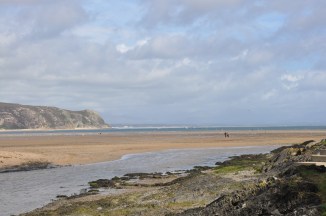
The West Country, with its Jurassic coastline, glorious sandy beaches and stunning scenery is always a treat, while Cumbria, featuring a feast of fabulous hills and majestic lakes offering ever-changing views as the setting sun turns day into night, is just a delight.

And right across England, Wales, Scotland and Northern Ireland—you can never feel disappointed with the rich variety of vistas and the lush, history-soaked landscapes which stretch far and wide and flood your senses with joy and satisfaction. Derbyshire 2 PeaksCumbria 6 The Lakes

Aesthetically and historically we can rival the globe’s finest vacation destinations. But do we have things right when it comes to offering value for money?

You’ll hear many frustrated parents say how expensive it is to stay in the UK with their children—especially if their luck’s out on the weather front.

We do have holiday camps, but for the most part they fall short on every aspect of what they offer, and in my view are best avoided. There are caravan and camping sites aplenty. But even they can prove expensive when entertainment, food and other costs are taken into consideration.

It can also be argued that some—if not all—providers of UK holiday accommodation seem to adopt the philosophy that if it’s cheap it doesn’t need to be clean and tidy! We’ve stayed in countless hotels and B&B’s over the years where this has been the case and the accommodation has been a total letdown.

I also wonder what first impressions foreign tourists have when they initially touch tarmac and prepare to explore our beloved isle.

Flying in and out of our major airports is, it’s fair to say, a work-in-progress. But for now, we’ll stick with “in”.

If you’re lucky enough to retrieve your luggage smoothly, you’ll still be taken aback by your first port of call, the toilet facilities, which will leave you in no doubt you’re now on UK soil (pun intended).

Having travelled abroad a fair bit, I’ve never found loos as badly abused as they are by Brits, both overseas and here in the UK.

Disney in Florida was a classic example. When we hit the famous Epcot Centre, where a multitude of different countries are represented, the UK facilities were unquestionably the worst!

And it doesn’t matter where you go here in the UK—whether it be motorway services, train and bus stations or airports—it’s always the same.

I’ve been bending ears about this for years, because I simply don’t understand it. Do people treat their own bathrooms the same way? I somehow doubt it. Not least because  it’s down to them to clean up the mess.

Do they really lack an ounce of appreciation for the people employed to keep public toilets clean? It’s clearly not going to win many votes for best job in the world. But it’s still, nonetheless, a vital one—and someone has to do it.

Surely we have it in us to behave responsibly when using our nation’s loos? To ensure the people who pass through after us—and the heroic cleaners—are not subject to some of the horrors witnessed in past movements?

Having fought your way out of the airport and onto the next mode of transport, you can at least relax and look forward to a good night’s sleep at the accommodation you’ve booked in good faith.

Or can you?

In most cases, yes. Especially if you’re paying an arm-and-a-leg—as in dropping a fat sack of money on a place to stay.

But beware if trying to grab a great deal. When it sounds too good to be true it usually is!

When hunting down holiday accommodation in Britain—be it for one night or longer —it can be, to quote the Tom Cruise movie, “a risky business.”

Always proceed with caution and pay due diligence when drawn in by some of the glowing descriptions for vacation rooms or rental suites advertised online. And be sure to thoroughly scour reviews and, if possible, get a personal recommendation.

There’s nothing worse, after a long flight or epic journey, to arrive and find the accommodation you have high hopes for is a complete joke.

Unfortunately, there seems to be an abundance of these below-par offerings in the UK. which is scandalous when people are paying in advance—as most do today. And, in many cases, it can ruin a hard-earned holiday.

I can’t get my head around how people can get away with running any kind of sub-standard holiday accommodation—and not have a legal mark to measure up to.

We used to have AA and RAC inspectors going to spend a night and assess suitability. Awarding a star, if merited.

But that seems to have now fallen by the wayside. At least judging by some of the experiences my family and I have endured in recent years!

Considering the amount of income foreign and British tourists pour into the UK’s coffers each year, the government has a responsibility to ensure customers are getting great value for money. Whatever their outlay.

The Ministry for Sport and Tourism, which has tackled tourism issues in the UK since the government reshuffle in 2012, needs to set concrete industry standards which all accommodation providers have to meet.

And if they don’t, a deadline should be issued for any necessary upgrades or improvements to be made. After which—if not met—the guillotine drops and the business is shut down.

Having found a good place to stay in the UK (fingers crossed!), you’ll never be short of things to do. Not least due to Britain’s rich history, heritage and culture—and all related attractions and activities. Warwicks 1 Warwick Castle.JPG

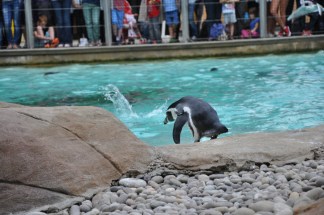
If coming with children, you’ll have no problem keeping them entertained. A visit to an historic castle will give their culture muscle a good workout. Or take them for a day out at one of Britain’s many zoos or theme parks. Theme Park 1Zoo

Alton Towers, Legoland and Chessington World of Adventures are three of the best known. Not quite on a par with a trip to Disney! But still fun for all the family.

You’ll need to budget for the theme parks though. The entry prices are high despite several looking a little tired and shabby in places, and it often being a bit hit-&-miss when it comes to rides being open and equipment functioning optimally. But they’re still as popular as ever—and be prepared to queue a while for some of the main attractions!

Another great option, especially if the weather’s good, is to head to the coast to enjoy one of the UK’s famous array of seaside resorts. One of the benefits of being an island! Cornwall 2Lymm Peninsular WalesDevon 3 Lyme Regis


Be smart when organising short or longer trips so you minimize any travel issues—such as rush-hour traffic if driving or taking a bus/coach—and check schedules online if you’re going anywhere by plane or train.

While we’re a fun, quirky bunch, there are 65 million of us packed onto these fair isles… which means getting around can take planning, co-ordination and most of all patience!

So, whether you’re coming from abroad or feel tempted to give this green and pleasant land a chance, surely the UK is worth considering in your future holiday plans.

’Til next time,

Granny FlapjaX


DO WE REALLY CARE IN THIS SO-CALLED ‘CARING’ SOCIETY?

Granny Flapjax Intro. Final Logo 2 1Mb

I have recently had cause to turn my attention to the state of the British care system, and feel a responsibility to shine a light on the challenges children currently face going through such a set-up.

While I accept a certain amount of red tape has to be cut through and due diligence taken when it comes to finding safe and secure homes, it also shouldn’t be such an arduous process and one where the children are innocent victims.

But who is really responsible for this stressful status quo? If we were to take a step back, pull out a zoom lens, then zero-in on the culprits making life so tough for the youth in this predicament, who has blood on their hands?

Does the blame lay solely with the parents, naively producing offspring like it’s the latest craze without proper thought and consideration as to how they’re actually going to provide and care for them? So often putting their own needs before those of the helpless offspring—and expecting tax-payers to fund this ineptitude?

Or should the authorities also shoulder their share of the glare?

Unquestionably they have an unenviable job. Making potentially life-changing calls on whether or not to leave vulnerable children in hostile environments with volatile parents, put them into care, or find them a short or long-term foster home, can never be done without thorough assessments and detailed investigations.

However, the time it takes to work through this process—usually featuring lengthy family court hearings—and draw the right conclusions is a major issue. While decisions are being made, children—sometimes tiny babies—are left at risk of physical, sexual or mental abuse—and frequently just neglected; the parents thinking they may lose them so caring even less.

But no matter the age, it’s abundantly clear social workers have a near-impossible task in trying to facilitate the removal of vulnerable children from dangerous environments and relocating them into safe ones.

Funding plays a huge part. Yet, the reality is there’s a desperate shortage, all over the country, of short and long-term foster carers. So, no matter how much money you throw at the issue, a shortage will likely still remain.

One reason for this is the long and arduous process which applicants are forced to endure—a crusade which can last more than six months.

There’s a seemingly endless amount of form-filling, much of which appears to be repetition, while detailed digging has to be done into an applicant’s past; his or her childhood, schools attended, addresses lived at, and misdemeanours committed.

While I agree 100% that police record and sex offender register checks are essential, I don’t understand the relevance of someone’s childhood and teenage years in making a decision.

Personally, I’m a very different person now to the one I was in my formative years—and have constantly evolved as an adult. Life’s experiences—good and bad—all play a part in how we grow and develop as people, and our attitudes and opinions change as we mature and take responsibility for ourselves and our lives.

So why then is it necessary to dig down into a person’s childhood and teenage years in determining whether or not they’ll make good foster parents, sometimes two or three decades later?

Makes no sense to me. Plus, the lengthy application process does nothing to attract potential foster families, or aid the children waiting to be placed.

It’s easy to see why so many would-be foster carers pull out of the process before completion. The lengthy, invasive and stressful plight leaves many—who likely would have provided a happy and safe family environment—bereft and dealing with hopes and spirits crushed by such an outdated system.

There has to be a better way moving forward—one which will both encourage more people to seriously consider fostering, and simplify the whole process. It needs to become less about form-filling and more about nurturing good people in healthy family units.

Above all, it has to be about the children—whether tots, teens or somewhere in-between—who deserve a safe and happy environment where they can live, play, flourish and grow.

‘Til next time,

Granny FlapjaX


SURFING THE WAVE OF FAMILY COURT CHAOS

Granny Flapjax Intro. Final Logo 2 1Mb

I RECENTLY got up-close-and-personal with the British Family Courts system—and witnessed, first-hand, its current farcical state of disrepair.

How so, you may ask? Well, where to begin? family-courts

Crucially—and most importantly—there’s no continuity. 

In your average criminal court the same judge presides and the same jury is appointed—seeing the trial or hearing through to conclusion. In the family court it’s a very different set-up… and one that clearly doesn’t work!

I can only speak from personal experience, but I have no doubts our case wasn’t a ‘one-off’.

There were three hearings in total—the first and third having the same judge, the second a different one.

That first judge appeared disinterested, impatient and unconcerned with any safety issues. It was the clerk of the court who advised the judge there was a safety issue which needed  investigating, and the judge reluctantly agreed. Child-First-RGB-dark-logo-e1453120126557-480x499

This would be carried out by CAFCAS (the Children and Family Court Advisory & Support Service) who, as I understand, are responsible for the safety and well-being of children in a relationship breakdown scenario.

Sadly it was only the second judge who took seriously the reasons our case had been brought before the family court.

However, at that second hearing, the judge and clerk of the court had to apologize as CAFCAS hadn’t been updated following the first hearing—and, as a result, no further investigations had been made. This was hastily reorganised in time for round three; but it was obvious it had been rushed through, as the relevant interviews were done over the phone. Certainly not ideal.

The experience has left me feeling extremely concerned for people and families going through these courts—and having to endure all this additional stress. Vulnerable people in tough, tricky situations—and without the right support or financial backing—are often, it seems, left to fend for themselves and fight their own corner.

At such a crucial and seminal time in the life of any family, should they not have the right—and is it not a basic human right—to expect a high level of professionalism? family-symbols-1170x775

Where there is acrimony between couples—and an amicable solution seems unlikely—what can be achieved by dragging the whole issue through a court system which seems, quite frankly, to be in a complete state of chaos itself?

The officials are unhelpful when you query anything you don’t understand. You’re also required to arrive at the court an hour before the hearing’s scheduled start-time, when there’s no obvious reason to do so. You’re then left waiting that whole hour—and longer. Why? Because the judge has to acquaint him or herself with the details of the case via the submitted papers before the hearing—when surely this should have been done in advance.

With this superficial knowledge, the judge is expected to come to a decision about a family they don’t know—or a situation about which they have minimal knowledge.

From my perspective, it’s an absolute shambles. The left hand doesn’t seem to know what the right hand is doing. And the poor families are left to suck up this added stress.

images

Separate waiting areas are offered to individuals in the appointment letter—but only if available. And for disputing couples who, for whatever reason, have no choice but to resort to the courts for resolution, being forced to sit-and-wait in the same room creates an uncomfortable atmosphere in an already tense environment.

Surely, in the 21st Century, we can better organise these courts and this system—which are specifically designed to resolve difficult and unpleasant family situations.

On the plus side, court security and the quality of facilities are good, while there was always an adequate number of staff in attendance.

However, from my perspective, the organisation was still shambolic—and, as a result, we’re letting families down and putting children at risk. children-and-divorce

Things need to change—and we can all play a part in making this happen by raising awareness and highlighting this kind of ineptitude whenever possible.

Thanks for reading.

’Til next time,

Granny FlapjaX

PUNISH CALLOUS TROPHY HUNTERS

Granny Flapjax Intro. Final Logo 2 1Mb

I HONESTLY cannot find the words to describe how I felt last week when I saw a photo someone had shared on Facebook.

It was a picture of a dead male lion—placed in a sitting position—and behind it a grossly overweight man, holding a rifle in his right hand, with a woman—presumably his wife—sat just behind.

Trophy Hunters 3
Trophy Hunters 1
It wasn’t hard to go to Google and type in ‘Trophy Hunter Kills Lion’—and there are literally hundreds of photographs with both men and women proudly showing off their ‘kills’.

Trophy Hunters 4

I find it hard to view pictures of such barbarity. But if that isn’t bad enough, alongside the poor animal is a smiling assassin. And I do mean killer. Because that’s what these people are: Killers. Trophy Hunters 2

What is wrong with them? I ask this question seriously—because there has to be a fairly major issue with their mental stability.

Whether you’re a big cat fan or not (though surely most of us are) what right-minded person could really take any pleasure from killing these masterful kings of the cat world? And simply for entertainment. Does it genuinely give them a sense of achievement or is it really all about power?

I believe they are sick, unhappy people with no sense of worth and very low self-esteem. And sadly, because they have the financial wherewithal to do it, they can big themselves up by taking the lives of these beautiful, powerful giants of the animal kingdom—and then bragging about it.

It honestly makes me feel ashamed to be a human being. But, more to the point, how are these people even given free license to shoot and kill these amazing animals? Who is allowing this to happen? It has recently come to my attention that in South Africa they are actually breeding lions just for the trophy hunters to shoot them. Can this be acceptable?

Clearly killing our planet by polluting the air, filling the oceans with vast amounts of waste, destroying the rain forests and melting the polar ice caps isn’t enough for some. 

By going out and killing for pleasure, these callous cretins are throwing the natural balance of the animal world out of sync, decimating the food chain, and, for sure, driving many of the animals we’re privileged to live alongside into extinction.

Extinct Animals 1Extinct Animals 2

And once they’re extinct, what happens then?

We need to understand that the natural world, of which we are a part, is inherently capable of looking after itself.

It will survive and recover from hurricanes, tornadoes, fires, floods and earthquakes. If humans weren’t here, everything would spring back to life, because that’s the force of nature.

But we are here—and sadly, because we’re interfering in the natural course of things, it would appear the earth is in a downward spiral.

I understand, to a point, why so many of the things relating to our animals in the wild—which I find so distasteful and unacceptable—happen. However, no matter which way I look at it, I can—and never will—condone the brutal killing of wild animals purely for the entertainment of the ‘sick’ rich.

donaldtrumpjr 1
It’s abhorrent, disgraceful, shameful, shocking, atrocious, deplorable, despicable and totally inexcusable that this is happening in the 21st century.

It HAS to be stopped. There are simply no justifiable reasons why this appalling practice should be allowed to continue.

Pressure must be put on those who partake—and those who allow them to do so.

The killing of our beautiful big cats and other precious wildlife for pleasure, has to be treated as a crime. Big Cats 3

And those who indulge must be punished accordingly.

’Til next time,

Granny FlapjaX

WOMEN – IS THERE GENDER EQUALITY IN 2018?

Granny Flapjax Intro. Final Logo 2 1Mb

I’VE been astounded in recent months with the near-constant media coverage of women and their complaints about how tough life is.

Probably not PC for me to raise this, but I can’t help wondering why it is they feel whining about their lot—at home, in business, socially, and in life generally—is the only way they can improve it? March for Women in London ahead of International Women's Day

Now, let’s be clear. I’m not talking about the issues relating to Harvey Weinstein and several others involved in sexual abuse allegations. If proven to be true, they deserve everything coming to them for such appalling behavior. Though, as has been argued in the ensuing fallout, the line between what’s considered acceptable ‘flirting’ and what’s not is now extremely blurred.

However, I do frequently hear on the radio or read in my newsfeed about women who seem to feel they’ve been forced onto their collective back foot when it comes to positioning themselves in society today.

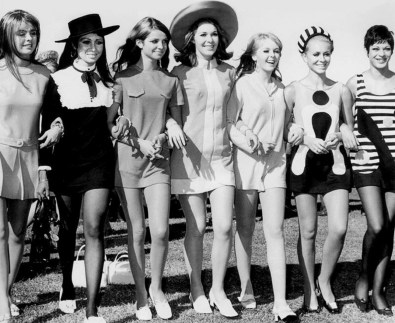
Admittedly, I’m a Baby Boomer. I went through my teens in the 1960’s; a revolutionary time of great change, featuring flower-power, mods and rockers, Mary Quant and Vivienne Westwood. We were full of ourselves, fashion and freedom—allowing us to live life to the full! We worked hard and we played hard. And I’m sure there are many people my age who wouldn’t disagree with the fact we sometimes had to accept the consequences of our actions. sixties

But that didn’t involve crying out to the world-at-large. Not least because, back then, we couldn’t. There was no-one to complain to. No social media, no court recognition (sexual harassment as a concept didn’t emerge ’til the 1970’s), and a greater sense of personal privacy. We simply didn’t want our names and faces splashed all over the papers. So we kept quiet and dealt with it.

In most instances—and I’m not talking about criminal offences such as rape which, of course, would have been handled by the police—we felt equipped and empowered to handle it ourselves. Harassment or unwanted attention, either in the workplace or a social setting, happened. And often. But, in most cases, we’d fend the perpetrator off.

c52ac-4

I’m not saying that type of behaviour is acceptable. Of course not. But if women want to stand alongside men in terms of equality, they must surely accept that they have to stand up for themselves, sometimes in difficult circumstances.Man-vs-Woman (1)

Likewise, while I can see many good reasons why a woman should be paid the exact same salary as a man when doing an identical job, is it always that simple?

In my teens I worked extremely hard—not always doing a job I enjoyed—until I eventually found my niche. However, in those days we were paid based on age and experience—and if you felt you deserved more, it was up to you to negotiate a raise with your boss.

Why is it now women in the workplace feel they have an automatic right to be paid the same as their male counterparts? It’s not about gender. It’s about who is best qualified to do a job—and who actually does it best, offering tangible value and worth.interviewing_resize

As an employer myself for many years, we paid based on age, experience, and any additional skills or talents an applicant had which made him or her a greater fit for the job on offer. Gender was irrelevant. The salary and conditions of employment were discussed and agreed upon at interview, before any offer. And if the candidate didn’t agree, they didn’t take the job.

I find it sad that women today are continually complaining. But, in reality, do they have a point? Are things really that bad or are those complaints justified?

Many have chosen to pursue careers while also raising a family, running a home, and trying to shoehorn in some kind of social life. Meanwhile, some mums have assumed true superhero status in doing all this solo as single parents. busy-parent-picture rev

In my view, it’s simply too much. And, as a consequence, we have a generation of mothers permanently stressed-out and struggling to keep all their plates spinning. All- too-often this leads to cases of depression and anxiety—negatively impacting both the mums and their families.

As a species, humans weren’t designed to be super-beings. However, society has led us down a path where women now feel they have to be. In reality, of course, we don’t.

Women are naturally able to multi-task. Making us, in my view, the stronger of the species. Not physically, of course. But in every other way. The problem is: we don’t believe it! And this feeling is further enhanced by the incessant media-griping—which, if anything, is actually undermining our status in society.

Life is tough, but you have to take the rough with the smooth. And if you can’t stand the heat, get out of the kitchen.

The opportunities for women today are endless. And a world away from the one I grew up in.Women_at_Work_-_Wrights_Biscuits

But the key is self-belief. We have to believe we deserve the best in life—and make the smart choices and decisions to take us there. That includes fighting our corner when necessary, and refusing to assume a victim’s mentality when things get spicy.

Remember, life is for living. And we have the power!

’Til next time,

Granny FlapjaX

TIME TO WAKE UP & STOP DESTROYING OUR PLANET!

Granny Flapjax Intro. Final Logo 2 1Mb

I CAN’T begin to explain how my heart breaks whenever I see or hear another story affecting this beautiful planet.
When, exactly, will we all come to our senses and start realizing just how important every single one of the amazing animals we share this planet with is to our existence?
9. Rhino MI was deeply saddened to hear that ‘Sudan’, our last male Black Northern Rhino, had recently passed away. Apart from the incredibly talented and dedicated people who work tirelessly to try and save Earth’s multitude of threatened species, does anyone really care?
Why aren’t governments around the world doing something about this? And why aren’t we individually and collectively putting pressure on global governments to change laws, rules and regulations? If we persist in ignoring what is happening around us, how long will it be before it’s too late to do anything—or even worse, to save the entire planet?
We’ve become a species totally driven and brainwashed by the fleeting joy and superficial satisfaction of greed and money. Rather than focusing on and savouring the amazing planet we’re privileged to live on, we seem hell-bent on destroying our environment—23. Shark-Fin-Trade-Factsour oceans, rain forests, marine life and wildlife. All of these are at our mercy and only WE can stop the destruction. Why? Because we triggered it in the first place!11. Lion M
Our selfish attitude is shameful. We think we can’t live without all the ‘things’ we believe make our lives happier. But, in reality, we can. Of course we can. We’re just spoilt—and very often emotionally detached from people, nature and the beauty of the world around us; the things that actually matter and give real meaning to our lives.Polar Bear Family Portraits
And given the runaway epidemic of mental health issues besieging millions of people across the globe, being obsessed with material things and ‘Keeping up with the Joneses’ is doing us way more harm than good.
The more I talk to people, spanning a wide range of ages and demographics, I’m finding an underlying unhappiness. But what, specifically, is causing it?
On a daily basis we’re being put under more and more pressure—brainwashed, as we are, into living life in the fast lane. And, often, we simply don’t have time to take a step back and consider the potential damage and negative impact such a lifestyle is doing to and having on ourselves and our planet.
Surely it’s time we stepped up to the plate, took responsibility and changed the way we live our lives, in a bid to rebalance, regenerate and protect the environment.
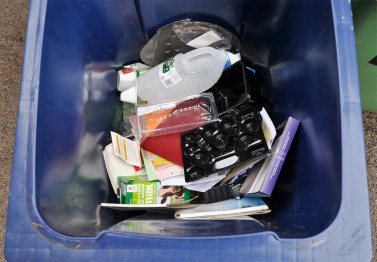
So, what can be done? For starters, we can ramp up our protests to shops and supermarkets to clear plastic from their shelves. We don’t need it and are perfectly capable of shopping without bags or plastic wrapping. It’s just ridiculous! Let’s break open the packaging, where possible, remove the goods we want and leave the plastic for the shops to dispose of responsibly. Or, better still, buy all-natural products which don’t require such packaging in the first place. Why are we paying the shops to take home all their rubbish? Are we stupid?!27 Wheely Bin 2We can campaign the government to set up a properly thought-out and organized nationwide recycling program. Clearly every council has different ideas, so why not put all those heads together to come up with a uniform plan? How about having same-colour bins and depots where all the materials can be sorted and shipped to the appropriate recycling centres?
It’s madness for every council to have different rules—and it also costs a lot more money. Bring it all under one roof and get the Minister for the Environment to take control. What, I ask, is hard about that? If we show the way, then the idea can be shared across the globe.

Next, let’s look at what’s happening to our wildlife. There are a huge number of species under threat of extinction. It’s already too late for the Northern Black Rhino. But how many more are we set to lose if we don’t buck our ideas up?
It’s time to stop putting the onus and responsibility on the animals to keep their species going. It’s the governments who allow their citizens to go out and brutally slaughter these majestic creatures for rhino horn, elephant tusk and fur. They are the guilty ones and should be held accountable.18. 9898d904c4aacd91434449e88312a53d
Rhino horn is supposed to be an aphrodisiac. Really? Who even believes that? Where is the evidence? Greed has driven the desire for objects made with horns and tusks, and as a result they’ve become a highly sought-after commodity and attract large amounts of money.
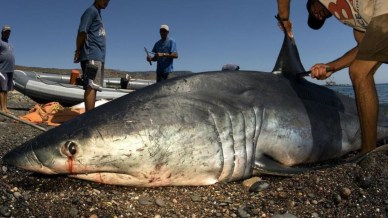
Who decided that shark fins would make a good soup? How utterly appalling is that? Not only are these savages slicing off the shark fins, they’re also then cruelly tossing the butchered bodies back into the ocean, where the sharks will either drown or die a slow death over several days, as they’re eaten by other fish. How can people, in the 21st century, possibly think this kind of behaviour is acceptable? It’s a travesty and must be outlawed.21. RcPtRBaIlhPyyNf-800x450-noPad
It’s not enough for western governments to make feeble attempts at stopping these atrocities by making the buying of ivory or rhino horn illegal. Of course that would help, but the problem needs addressing at source. Introduce the death penalty for poachers who are caught. That would make others think twice and surely be an effective deterrent.

19. f4bc47821c7e865c821a68006df4b922-988x640-988x640

And why should they be allowed to destroy our lives, which ultimately is what they will be doing? Take the Chinese to task over their killing of sharks for their fins. It’s an absolute disgrace and has to be stopped once-and-for-all.
No human life will change if they can’t eat shark fin soup, have ornaments made from ivory or rhino horn or indulge in sex minus a rhino horn aphrodisiac; if people are actually stupid enough to believe the latter will offer any real benefit on that front.
The rich indulge themselves in big-game hunting, encourage the horn and ivory trade with their wealth, but clearly have little respect for nature and the natural world; everything the latter offers to enrich our lives, our environment and make us better people.
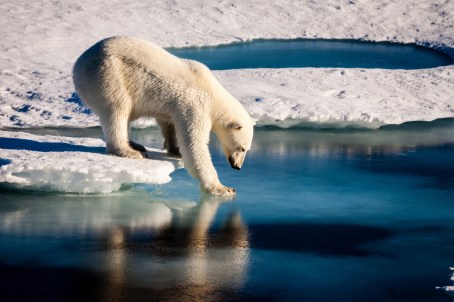
Animals and wildlife are such an important part of our ecosystem, what do we imagine will happen to the planet without them? In chopping down the rain forests we’re eliminating natural habitats and causing massive disruption to creature life cycles. The planet is warming and weather patterns are changing. Rain now doesn’t come when it’s supposed to, and there are huge droughts. The polar ice caps are melting and polar bears are under threat because they can’t access the food they need to survive.

25 Polar Bears 2

All of this is OUR fault and OUR responsibility. And surely not even necessary. I mean, how is chopping down rain forests even justified? What is it actually achieving?
This planet has been here for millions of years—but we as humans, a supposedly intelligent species, will be the cause of its very demise in a relatively short period of time if we don’t change our ways.
We have to act NOW and STOP the slaughter of wild animals; STOP the polluting of our oceans and marine life; and STOP the destruction of our rain forests.
Collectively we can do the right thing – the ONLY thing – and help SAVE this precious planet which has been entrusted to us in good faith.

Until next time,

Granny FlapjaX.

TV PRESENTERS: OUT WITH THE OLD, IN WITH THE NEW!

Granny Flapjax Intro. Final Logo 2 1Mb

I’D like to make a plea to the BBC, ITV, Sky, BT and all the other television stations who, for some reason, seem to think that we, the viewers, don’t want to see fresh presenting blood being injected onto our screens.

It used to be the case that, when a man hit 65 or a woman 60, they’d retire from work gracefully—vacating their jobs and, in doing so, allowing the younger generation of presenters to naturally step into their shoes and climb another rung on the career ladder. Not anymore.

Of course, due to successive governments screwing up the UK’s finances, the landscape has changed and people are now having to work for longer before they can claim their pensions. A very unfair situation, but one we have to accept.

However, I don’t think we have to accept the ageing television presenters and news readers populating our screens who, it seems, will die in situ if not removed beforehand!
I cannot for one minute believe there aren’t thousands of young people out there—all over the world, in fact—who wouldn’t give their eye teeth for the chance to work in television.

If ‘experience’ is the thing predominantly keeping older presenters employed, how about we concoct some kind of compromise. How about we move the ‘oldies’ upstairs, a la football managers, and have them impart their wisdom and experience to the new presenting crop from behind the scenes? That way everyone moves forward—and we viewers enjoy fresh faces.

Hearing recently the price of a UK television licence is set to rise again in April, I really feel now is the perfect time to have a ‘spring clean’ throughout the TV companies. Give young people a chance—before they’re too old to launch a presenting career and essentially ‘miss the boat’.

I don’t want to name names, but one male presenter I used to live near as a child—who I know has several more years on the clock than me—looks like he should be retired, but is still going! And I simply can’t believe there isn’t another younger person out there who could do his job at least as well, if not better.

I don’t believe for a minute any of them cannot afford to retire, or at least take a back seat—not on the salaries they are being paid.

So what’s going on?

I simply don’t understand TV companies. I get they have to comply with certain rules in relation to diversity when it comes to making their employee selections. But surely we, the viewers, are entitled to see fresh and younger faces on our screens—and spread right across all genres.

Approaching this from another angle, I wonder if any of these ‘ageing’ presenters have even considered how they come across on our screens? Some of them appear on a daily basis, and I have to own up to often changing channels to avoid seeing them.

There is also the “same old, same old” aspect we get—more from presenters than news readers. The repeated one-liners and corny, cringeworthy jokes which seem to be accepted as ‘the norm’ by us, the British public. We are, in my opinion, far too accepting of the status quo—or perhaps simply too comfortable with familiarity?

So, what’s the answer?

The simple solution would surely be to set an age limit at which a presenter is required to vacate and ‘retire’ their position. When they hit the chosen mark, they’re out! And that would apply to both men and women, so there’s no sexism.

And if they really can’t contemplate a life without work, there’s always radio. Listening to a nice mature voice coming from the airwaves can be a joyous experience—and we don’t have to see the ‘wrinkly’ behind it (webcams are optional).

Having said that, I do think the regular injection of fresh blood and new talent should also apply to radio DJs and presenters. It comes across as often being like some kind of exclusive ‘club’ on the airwaves; i.e. if you’ve worked on stage or screen, or in TV/sport, you’re almost guaranteed a job on radio as well—no matter how old or specifically qualified you are!

I listen quite a lot and could count on one hand the station presenters who don’t appear on or in other mediums. How many jobs do you need for goodness sake? Just because you do an ‘alright’ job on television, doesn’t mean you’re necessarily suited to radio—and vice-versa.

And more seriously, if we want to engage our youth and inspire the next generation to take an interest in the world they’re growing up to be responsible for, then maybe younger faces presenting the facts and figures to them via their TVs, tablets or smartphones—faces closer in age who they could more readily relate to—would be a very positive thing.

When I was in my late teens to early twenties, I certainly wouldn’t have engaged with or been enchanted by a presenter who appeared to be as old as my grandfather—even if he was in black and white!

I don’t want to be unkind, but I think it’s high time those wielding the power within media companies should take a more considered overview of their ageing presenters—and give serious consideration to a change in policy.

Our talented buds need the chance to bloom!

Until next time

Granny Flapjax  X

PAIN – LOVE IT OR HATE IT?

Granny Flapjax Intro. Final Logo 2 1Mb

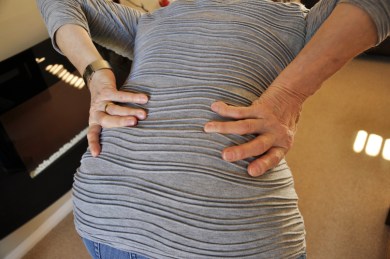
A few days ago my hubby and I were walking in the beautiful winter sunshine when he asked me how my back was. That’s because he’s both very considerate and knows I’ve suffered back pain for a number of years now.
I’ve also endured pain in my neck, shoulder and head for over 30 years—due to a long-term condition called Spasmodic Torticollis (ST). ST is a strain of a lesser-known neurological disease called Dystonia, with symptoms akin to those experienced in Parkinson’s disease.
Please keep reading! I’m not seeking sympathy in this post. I just want to share my experiences and coping mechanisms in the hope I may be able to pass on some tips to anyone out there suffering from long-term pain.

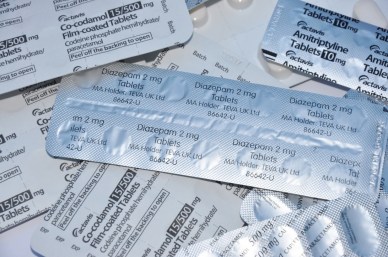
When all my troubles began I was initially treated for depression, even though I wasn’t depressed. I had physical symptoms but, because my then doctor didn’t recognize them, he kept throwing more pills at me. To the point where I was taking 24 tablets a day!
At the time I had three young children, and eventually realized that, due to the medications, I was no longer the person I was before I started down that route. So, one day, I scooped up all the bottles of pills and flushed them down the toilet.
That was how we disposed of unused medication in those days—though now, of course, would be frowned upon as not a safe thing to do (polluting our water system etc.). We also now know that, when you come off certain types of medications—if not all—you should do so gradually. Wean yourself off under control so as to minimize withdrawal effects.
I survived, however, and slowly returned to being the person I knew as ‘me’, even if the physical symptoms remained.
After moving to a new area and changing doctors, I was referred to a neurologist – following a mental health assessment – after which I was declared ‘normal’. Whatever that is!
Following many hospital visits and trying ‘alternative’ treatments over the ensuing years—while running a full-time business with my hubby and bringing up our children—I began to realize that the pain I lived with on a daily basis was now a part of my life… and here to stay.
I’d long-since forgotten what it felt like to be pain-free. And, as ridiculous as it sounds, I actually thought I’d miss it if it wasn’t there! Mags Pain Images 8
To aid my plight, I found a support group for people struggling with the same condition – and eventually became Chair. I’m not a fan of small groups, so amalgamated three into one as I found it easier to attract good speakers to a larger audience.
We addressed and resolved issues such as people struggling to get their treatment on time. And also helped them see it was they who were ultimately responsible for managing their condition.
It is still possible to have a good quality of life when going toe-to-toe on a daily basis with pain. But it’s up to us to embrace the situation—and believe we can dance with it.
Help is out there, for sure. But you also have to source and access that help—put simply: ask for it—as it won’t come looking for you.
I know from personal experience how hard that is to do. But accepting the pain and embracing it is the first step in making it a positive part of your life—and also puts you back in control.
I’ve had major surgery on my neck, followed by several years of physiotherapy support; a spinal fusion on my lower back; and latterly have been diagnosed with arthritis. All of which have left me with a cumulative amount of residual pain.
I am, though, very lucky to have the love and support of my husband and family—and try not to ‘moan’ too much… even if sometimes it’s very hard not to!
However, because I’ve lived with pain for so long now, I’ve learnt the best way to cope is to embrace it and treat it like a ‘friend’. As much as we’d like it to, it’s not going away. It may ease for a while—before, invariably, returning with a vengeance! And so, making friends with it is an effective way to venture forth.
Treating pain with a positive attitude definitely makes it easier to bear. Plus, that way, when I wake up each morning it just feels normal to me. It might take me a while to get going. But I don’t look upon it as a negative—just a part of my day.
I do take a nominal amount of painkillers when needed—but nothing like the number I’ve been prescribed. So I’m in control of that, too. I want to enjoy life, pain-‘n’-all, and not be in conflict with it. Medication can mask the pain temporarily, but is never a permanent fix. Mags Pain Images 5
Diet can also play a part in helping with pain, particularly with arthritis. From experience I know that acidic and fatty foods can cause flare-ups. But, because everyone is different, it’s a good idea to keep a food diary so you have a record of which foods affect you. It doesn’t mean you should never eat those foods again. However, if you do indulge, be prepared!
Over the many years I’ve been living with pain, I’ve found so much inspiration from others in the same predicament. And, most of all, I’ve learnt not to be a ‘victim’.
Being positive and refusing to allow your situation to overwhelm you is the best and only way forward.
I hope penning this post and suggesting another way of thinking about pain can help improve your quality of life, if you’re struggling with pain on a daily basis.
Until next time.
Hugs,
Granny Flapjax X

RESURFACE OUR CRUMBLING ROADS!


Granny Flapjax Intro. Final Logo 2 1Mb

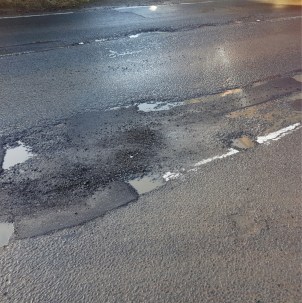
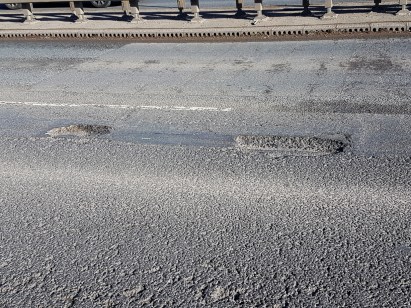
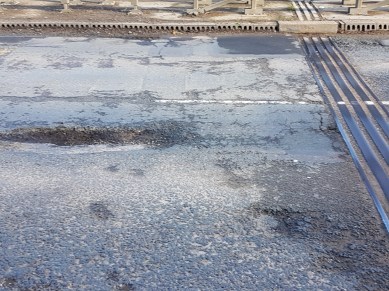
How many of you out there share my frustrations about the current state of our Great British roads? Not so “GREAT” are they?! In fact, I believe that if something isn’t done soon, we’ll be driving on roads of a standard equivalent to a Third World country. Which for a ‘First World’ nation is simply embarrassing. Pot Holes 1

Highway authorities and councils need to seriously ‘get a grip’, take control and give us the quality of roads we’re entitled to expect for the taxes we pay. And if they don’t take action soon, it’s up to us to kick up a fuss about the situation whenever possible and force them to act.

This time of year, with the sometimes challenging weather conditions, the roads deteriorate even more – and driving nationally or locally becomes hazardous if, like me, you’re trying to avoid damaging your car.

I’ve received horn-blasts, mouthed abuse and not-very-nice gestures from drivers when I’ve had to swerve my car off the regular driving line to avoid massive potholes in the road. I understand why—and I don’t like doing it. But I also don’t see why I should be faced with an expensive repair bill if forced to drive over dangerous potholes which shouldn’t be there in the first place.

What I especially cannot get my head around is that last year, during a two-week spell in the summer, we had to endure massive traffic hold-ups because workmen were out there filling up the potholes on one stretch of busy road I use regularly. There was a collective “Hooray!” among drivers at the time. But our joy/relief was short-lived—as less than six months later the potholes are back, bigger and ‘better’ than ever! Pot Holes 4

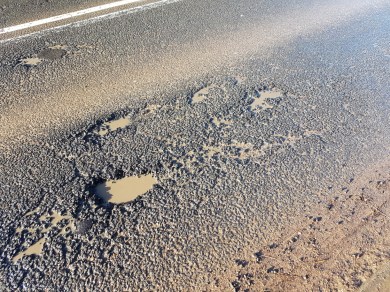
On a recent supermarket run, I nearly ended up in what can only be described as a ‘sink-hole’. It was so deep you couldn’t even see the bottom—at least not from the driver’s seat. If you’d landed plum in the middle of that you’d have been in serious trouble. Amazingly, the highway crews filled that in within a few days—but at the same time missed all the other shallower potholes surrounding it. Very frustrating!

During the course of a year, my hubby and I will usually drive up to Scotland, down to Cornwall, and across to Wales—covering a good part of the UK. So I feel qualified to say that it isn’t just the ‘A and B’ roads—but the motorways too—which are crumbling.

At some point the Government needs to tackle the state of our highways head-on and come up with a plan—not just to repair the potholes, but also to resurface all the roads. Repairing them is only a temporary measure—and if the job isn’t done properly in the first place, it’ll end up costing us more. “Buy cheap buy twice” is a phrase that springs to mind. Obviously it’d be a long-term project—and an expensive one. But it simply has to be done. And ASAP. Pot Holes 2

With more and more traffic cramming our roads by the day, we can’t go on putting up with the deterioration. Not only are we all at risk of serious damage to our vehicles, but journeys will take longer and longer as drivers are forced to slow down—creating extra traffic jams… and more road rage!

Though our frustrations may frequently threaten to boil over while out on the road, it’s important we don’t take them out on fellow drivers, and instead collectively target our ire at the Government, Highways England (Scotland, Wales or Northern Ireland) and all the local or county councils responsible. And not go lightly, but let them have it—all guns blazing!

The Government may be struggling to find the money to do this work properly—but might I suggest they reconsider the HS2 project? Now that Carillion is being liquidated, there’s a perfect opportunity to re-assign the £53 Billion-plus into upgrading Britain’s roads. It makes no economic sense to build a section of rail which will improve the time of one train route, when there are millions of us drivers out there every day trying to navigate ever-deteriorating roads. Pot Holes 7

I also wonder what portion of our Council Tax is being paid out each year to drivers whose cars have suffered extensive damage due to the state of the British roads? Perhaps we should insist those figures be published so we can see the real cost to the UK taxpayer.

And it isn’t a problem which just affects car drivers. What about all the truck and van drivers who hit our roads daily to help businesses thrive and keep our economy moving? Has anyone in Westminster even given a thought as to how firms will be affected when the roads finally crumble completely? I doubt it, as they’ll likely try to pass the buck and shirk responsibility—just as previous governments have. It’s all just so short-sighted!

But something HAS to be done. And it’s up to us, the people, to ensure action is taken. Please share your thoughts about the state of Britain’s roads—and your own country’s highways if you’re reading this outside the UK—in the Comments section below.

In the meantime, stay safe and drive carefully!

Granny Flapjax X

PLASTIC – CAN WE LIVE WITHOUT IT?

Granny Flapjax Intro. Final Logo 2 1Mb

With all the talk of plastic and how we deal with the enormous quantities of waste which are non-recyclable, I feel the need to get ‘stuck in’ on the subject!
Taking an overview of the situation, it seems to me there are so many changes we could make globally, but governments just don’t seem interested. Is this because, by the time the damage to our planet becomes irreversible, the responsibility will belong to someone else? Or is it because they just can’t be bothered? I believe it’s partly both. But how can politicians not care about the future of the planet, especially when most have children and grandchildren?

They have a responsibility to make changes—and NOW; not over the next 25 years. And they must force manufacturers, retailers, restauranteurs, cafe owners and all those businesses which are churning out waste plastic day-after-day, to look at their levels of waste and work together to find ways to reverse the trend. The point is, we all managed before plastic was invented, but we have become brainwashed into believing that we can only buy items that are wrapped in attractive packaging—or food that comes in polythene or plastic containers. It’s ridiculous!

Plastic Bottles
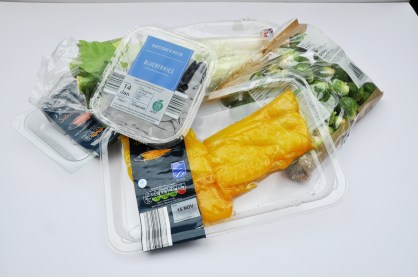
In part, Health & Safety, although good in some areas, has been directly responsible for many of the changes which have led to foods and other items being wrapped and in some cases wrapped again! A case in point: recently I wanted to buy four baking potatoes. My choices were, four in a polythene bag, four in a plastic vacuum-formed tray and a paper bag with a clear plastic front or four which I could select myself from a box of loose ones. I’m ashamed to say that, initially, I picked up the potatoes in the tray and bag until suddenly my conscience pricked me! I put them back and selected from the loose box and placed them in my trolley. They remained like that through the check-out, into my shopping bag and then home, where they were washed before cooking. No-one was ill and I was delighted not to have a bag to throw away!

Many years ago, in the late 1980s, my family and I visited my youngest sister who has lived all her married life in Mexico. Shopping there was a whole new experience for me. Specifically, when it came to fruit and vegetables—of which there was a wonderful abundance of virtually any type you could wish for. And the difference being that nothing was packaged. You made your selection, paid and took it home. I later saw my sister cleaning her fruit and veg in washing-up liquid, rinsing it well, then leaving it ’til she was ready to cook. I, of course, queried why she would wash her fruit and veg, and her sensible answer was that many people would have touched it on its way to the shop or market. So, just because our UK fruit is wrapped, does that mean it’s ‘untouched by human hands’? Very probably not. In which case, let’s have it offered for sale with no packaging—and we can then all be responsible for washing our fruit and veg before eating or cooking it. I always wash fruit or veg which will be eaten with the skin on, anyway.Veg Packaging

Another problem with everything being packaged today is that we’re not building a natural immunity to many of the bugs and viruses that millions of us fall victim to each year. We’ve created a sterile environment which in itself is dangerous.

One idea would be to use the waste paper that the Chinese government has now refused to take from us, and turn it into paper bags, which in turn could be used in our shops and supermarkets. It’s not rocket science is it? And surely there are also some great business opportunities just waiting to be discovered.

The idea of a ‘plastic-free’ aisle in supermarkets is just about the most ridiculous suggestion I’ve ever heard! And what does it mean exactly? Because, if it means that everything in that one aisle will have no plastic packaging, then surely it’ll mean the manufacturers of all the items displayed in those aisles will have to produce goods without plastic around them? In which case, why can’t they do it for all of their products?

Another extraordinary solution that our government has come up with to aid the reduction of waste plastic is to tax all plastic carrier bags by extending the current 0.05p charge to include small businesses. This is also a ridiculous idea. If they really want to stop people using them and to bring their own bags, they should charge a hefty 0.25p per bag. Or, better still, stop manufacturing them altogether! Then we can all go back to using shopping baskets—just like our parents and grandparents used to.

It’s very hard, at times, not to hark back to the ‘good old days’. But, honestly, sometimes there’s just no option. In the latter part of the 20th century, household goods, clothes and food were priced according to what they cost to produce—plus a profit margin for the retailer. Everyone seemed happy with that set-up; paying what was considered to be a fair price all-round. And if an item stopped working or clothes started show signs of wear, there was always someone on the high street ready to repair it… sewing box at-the-ready! I’m no seamstress, but even I have darned a sock or two in the past.

However, suddenly in the 1990s—then early 21st Century, cheap goods started flooding in from abroad and it became clear that ‘make do and mend’ was becoming a thing of the past. Goods were so cheap it wasn’t worth the time or effort to try and repair them. And, worse still, some of the items—many made from plastic—were being packaged in plastic too! Attitudes seemed to change completely and, coupled with the new easier ways to borrow money, shopping became the new pastime, with most goods becoming disposable.

Today, I’m not sure that much has changed. I was shocked to hear on the radio recently, a presenter talking about removing the Christmas lights from his tree and trying to pack them away. He said that after 25 minutes of trying to untangle them he gave up and threw them in the bin—vowing to buy new ones next year. Pretty shocking!

While many of us are doing our ‘bit’, it’s hard to see the ‘wood for the trees’ when clearly there’s more than one mountain of waste plastic out there waiting to be dealt with. The government needs to pressure councils to work harder at educating us as to what can and can’t be recycled.

Plastic WasteThe advice we’re currently given is very basic. The council will issue a leaflet each year with the collection days listed, and it offers us a rough/general idea as to what can be put in the recycling bin. However, there are so many items made from multiple materials which, in theory, makes them non-recyclable. But how are we to know?

I think there should be a national plan for recycling, funded by the Department of the Environment, and every council should have to follow those guidelines. It would be easy to administer and greatly reduce the amount of landfill. The government should also make it law for all manufacturers to state on their packaging whether it’s recyclable or non-recyclable. So many of the items I buy say ‘check local recycling’—and you can’t! It’s simply ‘passing the buck’.

In one form or another plastic is used across the world in almost everything that is made, but does it need to be? In some cases it can be argued that ‘yes it does’—and there are enormous benefits to the manufacturing of a large number of the items that we’ve become so accustomed to using every day. Many of these types of plastic are recyclable, which is great. But there are also many that aren’t—and this needs to change.

Globally, we need to unite and make some major changes to how we live our lives—working together to help protect our environment for future generations.

Happy recycling!
Granny Flapjax X